inshana.com

Author name: inshanamujeebrahman.a@gmail.com

BEST DIGITAL MARKETER IN KOCHI
Uncategorized

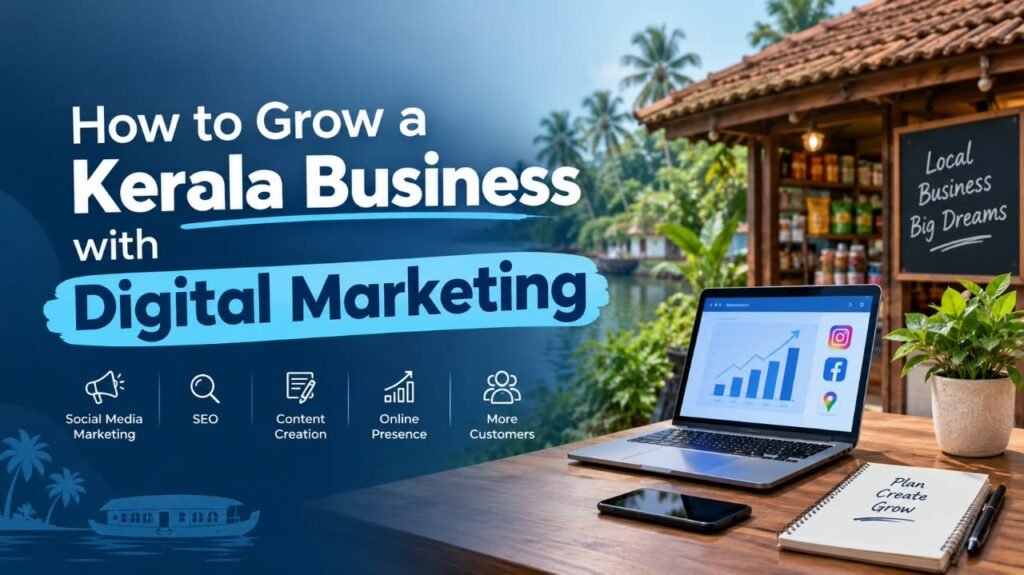
How to Grow a Kerala Business with Digital Marketing

How to Grow a Kerala Business with Digital Marketing Kerala people use mobile phones a lot. Whether it is a small shop in Kochi, a homestay in Munnar, an Ayurveda centre in Kovalam or a bakery in Kozhikode, most customers first check Google or Instagram before they visit. If your business is not visible online, you are losing customers to someone who is. The good news is that you do not need a big budget. You only need a clear plan and some patience. Here are the steps that work for Kerala businesses. 1. Start with a Proper Website Your website is your online shop. Even if you get most customers from WhatsApp or Instagram, a website makes people trust you more. Keep these things in mind: – Simple design. Do not fill the page with too many photos and colours. Show what you sell, your price range, and how to contact you.– Fast loading. Many people in Kerala browse on mobile data. If your site takes more than a few seconds to open, they will leave.– Mobile friendly. Most of your visitors will use a phone, so check how your site looks on a small screen.– Contact details on top. Put your phone number, WhatsApp button, address and Google Map location where people can see them easily. 2. Use Local SEO to Get Found on Google When someone searches “best homestay in Wayanad” or “furniture shop near Thrissur”, Google shows local businesses first. This is called local SEO, and it is the cheapest way to get customers. Set up your Google Business Profile.It is free. Add your shop name, address, phone number, timings, photos and a short description. Choose the right business category. Ask happy customers for reviews. After a good service, just say, “Sir, if you are happy, please give us a review on Google.” Most people are ready to do it. Reply to every review, even the bad ones, in a polite way. Use local words on your website. If you are in Kannur, write “Kannur” in your page titles and text. Do not write only “best tailor”. Write “best tailor in Kannur”. Keep your details the same everywhere. Your name, address and phone number should match on your website, Google, Facebook and other listings. 3. Write in Malayalam Also This point is often missed. Many people in Kerala search in Malayalam, or write Malayalam words in English letters. If your customers are local, a Malayalam page or a few Malayalam lines can bring extra visitors. For example, a Malayalam version of your service page can help you reach older people and customers from smaller towns who are more comfortable in their own language. You can also keep your main site in English and add Malayalam content in your blog or videos. 4. Use Social Media Where Your Customers Are You do not need to be on every platform. Pick two or three and do them well. Instagram and Facebook are good for restaurants, boutiques, jewellery, bakeries, resorts and beauty parlours. Post real photos of your work, not only stock pictures. Short reels showing how you make a product, or a customer’s happy reaction, get good reach. WhatsApp is very strong in Kerala. Make a WhatsApp Business account, add your catalogue, and set an auto-reply message. You can also send offers to customers who have agreed to receive them. Do not spam people, or they will block you. YouTube works well for teaching or showing things: cooking, farming tips, Ayurveda advice, travel guides, and product demos. A good video can bring customers for years. Post regularly. Three good posts in a week are better than ten posts in one day and then nothing for a month. 5. Take Advantage of Kerala’s Special Strengths Kerala has some big advantages that you can use in your marketing. – Tourism. If you run a hotel, houseboat, taxi service or tour, show real photos and videos of your place. Write about nearby spots and what visitors can do. Foreign and out-of-state tourists plan their trips online.– NRI customers. Many families have someone working in the Gulf or abroad. They often buy gifts, gold, spices, food items and services for their family at home. Make it easy for them to order and pay online.– Local products. Spices, coconut oil, banana chips, coir, handloom and Ayurveda products have a good name across India. Tell the story behind your product: where it is made, who makes it, and why it is genuine. 6. Try Paid Ads with a Small Budget Once your website and profiles are ready, you can run small ads to get faster results. – Google Ads show your business when people search for something you sell. This is good when the customer is ready to buy.– Facebook and Instagram Ads let you show your offer to people in a particular area, age group or interest. Start with a small amount, like a few hundred rupees a day. Target only your city or district. Watch which ad brings calls or messages, and stop the ones that do not work. Do not spend big money before you know what works. 7. Collect Customer Details and Stay in Touch Many businesses get a customer once and never contact them again. This is a big loss. Keep a simple list of your customers’ names and phone numbers or emails, with their permission. Then you can send them a festival offer on Onam or Vishu, a reminder for a repeat service, or news about a new product. An old customer is easier to sell to than a new one, and they also bring their friends and family. 8. Check What Is Working Digital marketing is not guesswork. Use free tools like Google Analytics and Google Search Console to see how many people visit your site, where they come from, and what pages they read. Check your Instagram insights also. Every month, ask yourself: – Where did most of my enquiries come from?– Which post or […]

BEST DIGITAL MARKETER IN KOCHI
Uncategorized

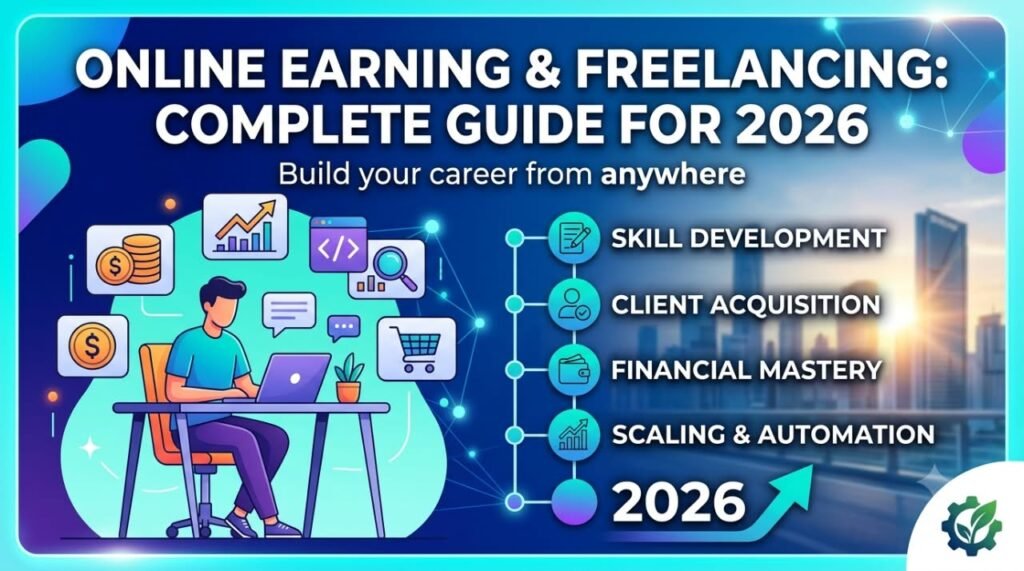
Online Earning & Freelancing: Complete Guide for 2026

Online Earning & Freelancing: Complete Guide for 2026 Freelancing and online earning have become very popular nowadays, especially after so many people realised they can work from home and still make good money. Whether you are a student, a job seeker, or just want extra income, this guide covers everything — from best ways to earn, best skills to learn, how to start in Kerala, and best jobs for beginners. 10 Ways to Make Money Online in 2026 1. Freelance WritingIf your English or Malayalam writing is good, you can write blogs, articles, and website content for clients. Many companies need fresh content every week, so this field never runs out of work. 2. Graphic DesigningTools like Canva make designing easy even for beginners. You can create logos, posters, Instagram posts for small shops and businesses around you. 3. Video EditingEvery business wants reels and YouTube videos nowadays. If you know CapCut or Premiere Pro, you can edit videos for creators and charge per project. 4. Online TutoringGood in Maths, Science, English, or coding? You can teach students online through platforms or even start your own classes on YouTube. 5. Affiliate MarketingYou promote products through blog or social media, and earn commission whenever someone buys through your link. Amazon Associates is a common starting point. 6. DropshippingStart an online store without keeping any stock at home. Customer orders from your site, supplier ships directly. Needs research, but many are doing well with this model. 7. Blogging and YouTubePick one topic — food, travel, finance, tech — and post regularly. Once traffic grows, you earn through ads and brand sponsorships. 8. Virtual Assistant WorkBusinesses and busy professionals need help with email, scheduling, and small admin tasks. Good option if you are organised. 9. Web and App DevelopmentEven basic coding skill can get you freelance projects for building small websites or apps. Payment is usually good in this field. 10. Data Entry and TranscriptionSimple, beginner-friendly work. Payment per task is low, but it helps build experience and trust with clients in the beginning. Best Freelancing Skills for Students in 2026 Students can easily earn part-time income if they learn these skills properly: – AI tools usage — knowing how to use ChatGPT, Claude and similar tools properly is a big advantage now– Content writing and copywriting– Graphic design using Canva or Figma– Video editing– Social media management for small businesses– Basic web development — HTML, CSS, JavaScript– Digital marketing and SEO basics– Voice over or translation work, especially in regional languages like Malayalam Learning even one or two of these skills well can open doors to steady freelance income while studying. How to Start Freelancing in Kerala Kerala has good internet reach and high literacy rate, so freelancing is growing fast here, especially in cities like Kochi, Thiruvananthapuram, and Kozhikode. Here is how you can start: Step 1: Pick Your SkillChoose something you already know or are interested in learning — writing, design, coding, tutoring, anything. Step 2: Build a Small PortfolioBefore applying for paid work, create 3-4 sample projects. This shows clients your work quality even without prior experience. Step 3: Create Profile on Freelance PlatformsSign up on Fiverr, Upwork, Freelancer.com, or local job groups on Facebook and WhatsApp where Kerala businesses post freelance requirements. Step 4: Start with Local ClientsMany small businesses in Kerala — shops, restaurants, real estate agents — need social media handling or basic website work. Local connections can be your first clients. Step 5: Price Fairly in BeginningDon’t charge too high in starting. Build reviews and trust first, then slowly increase your rates once you have good feedback. Step 6: Join Local CommunitiesThere are freelancer and startup communities in Kerala, including coworking spaces in Kochi’s Infopark and Technopark Thiruvananthapuram, where you can network and learn from others. Best Freelancing Jobs for Beginners f you are completely new to freelancing, these jobs are easiest to start with, no big skill needed: – Data Entry— simple copy-paste type work, good for learning basics– Transcription — converting audio to text, needs good listening and typing speed– Content Writing — if you can write clearly, this is a good starting point– Virtual Assistant — managing emails, calendars, simple admin tasks– Social Media Posting — scheduling and posting content for small business pagesProofreading — checking spelling and grammar mistakes in documents Basic Graphic Design — simple posters and templates using Canva Start with one of these, build 2-3 months of experience, then move to higher paying and skill-based work like writing, design, or development. Final Thoughts Freelancing in 2026 is open to everyone — students, homemakers, job seekers, anyone ready to learn and put in consistent effort. You don’t need to master everything at once. Pick one skill, practice it well, create a small portfolio, and start applying on platforms or approach local businesses directly. For people in Kerala, the growing tech scene and internet access make this the right time to start. Slowly, with patience and good work, income will grow along with your experience.

BEST DIGITAL MARKETER IN KOCHI
Uncategorized

AI Marketing Will AI Replace Digital Marketers

AI Marketing Will AI Replace Digital Marketers Artificial intelligence has moved from being a buzzword to becoming a daily tool inside nearly every marketing department. Chatbots answer customer questions around the clock. Algorithms predict which products a shopper is likely to buy. Automated systems schedule social media posts and personalize email campaigns without a human clicking send. AI marketing is no longer something companies are experimenting with on the side. It has become part of the core infrastructure behind modern advertising and brand building. Naturally this progress has left many digital marketers asking an uncomfortable question. Will AI eventually take over their jobs completely. The honest answer is more complicated than a simple yes or no. To understand where things are heading it helps to look at what AI actually does well and where it still falls short. Where AI Marketing Truly Shines AI is remarkably good at handling tasks built around patterns, repetition and large volumes of data. Consider search engine optimization. Tools powered by AI can scan thousands of keywords, study competitor rankings and generate content outlines in a fraction of the time it would take a human researcher. Marketing automation platforms track customer behavior across websites, apps and email opens, then use that data to trigger personalized messages at exactly the right moment. Pay per click campaigns are optimized in real time as algorithms adjust bids based on performance data that would overwhelm a human analyst. Predictive analytics is another area where AI has changed the game entirely. Businesses can now forecast customer churn, identify which leads are most likely to convert and even predict seasonal demand shifts with a level of accuracy that was simply not possible a decade ago. These capabilities free up marketers from repetitive manual work and allow campaigns to run with far greater efficiency. Where Human Marketers Still Matter Despite these advances marketing has never been purely about data. It is fundamentally about understanding people. Brand storytelling, emotional connection and cultural relevance are areas where AI still struggles to match human intuition. A machine can generate grammatically correct copy in seconds but it often lacks the subtle wit, empathy or cultural awareness that makes a campaign genuinely memorable. Think about a brand navigating a sensitive social issue or launching a campaign tied to a cultural moment. These situations demand judgment, ethical consideration and an understanding of nuance that current AI systems cannot fully replicate. Marketers also play a crucial role in building trust. Customers can often sense when content feels robotic or disconnected from genuine human values, and that disconnect can quietly damage brand loyalty over time. Creative strategy is another area where human input remains essential. AI can suggest ideas based on existing trends but true innovation, the kind that breaks patterns rather than following them, still tends to come from human creativity. A marketer who deeply understands their audience can craft a campaign concept that no algorithm would have thought to generate because it did not exist in any prior dataset. The Rise of Human AI Collaboration Rather than framing this as a battle between humans and machines, the more accurate picture is collaboration. Digital marketers who embrace AI as a tool rather than viewing it as a threat are already seeing significant advantages. Content creation that once took days can now be drafted in hours, giving marketers more time to refine messaging, test creative angles and focus on strategy rather than repetitive execution. Search engine optimization offers a clear example of this partnership. AI tools can research keywords, identify content gaps and even draft initial outlines, but a skilled marketer is still needed to shape that raw material into something that feels authentic, aligns with brand voice and genuinely serves the reader rather than simply targeting an algorithm. The same applies to social media marketing where AI can analyze engagement patterns but a human still decides how a brand should respond during a viral moment or a public relations challenge. Marketing teams are increasingly adopting a hybrid model. AI handles data analysis, campaign optimization and repetitive content generation while human marketers focus on strategy, creative direction and relationship building. This division of labor allows teams to move faster without sacrificing the authenticity that customers still crave. Skills That Will Matter Going Forward For digital marketers wondering how to stay relevant, the path forward involves developing skills that complement rather than compete with AI. Understanding how to prompt and guide AI tools effectively is becoming as valuable as traditional marketing knowledge. Data literacy, the ability to interpret AI generated insights and translate them into meaningful strategy, will separate marketers who thrive from those who struggle to keep up. Equally important is doubling down on the skills AI cannot replicate. Emotional intelligence, storytelling, ethical judgment and creative problem solving will only grow in value as automation handles more of the routine work. Marketers who position themselves as strategists and storytellers rather than pure executors will find themselves indispensable regardless of how advanced AI marketing tools become. A few years ago, “using AI for content marketing” meant experimenting with a chatbot to see if it could write a halfway decent tweet. Today it’s a core part of how serious marketing teams operate, from idea generation all the way through to performance analysis. The teams getting real value out of it aren’t the ones who let AI write everything unsupervised. They’re the ones who’ve figured out where AI genuinely saves time and where human judgment still has to lead. Start with research, not writing The biggest mistake marketers make is jumping straight to “write me a blog post about X.” AI tools are far more useful earlier in the process, when you’re still figuring out what to say in the first place. You can ask an AI tool to summarize what’s already been published on a topic, pull out common questions people ask in forums or search results, or identify gaps competitors haven’t covered well. This kind of research used to take […]

Scroll to Top